Guitar Amp Modeler/Multi-FX

HexeFX, whose Jaws-themed guitar effects pedal we’ve featured in the past, is back with the fully open-source TGX4 amp modeler and multi-FX pedal.
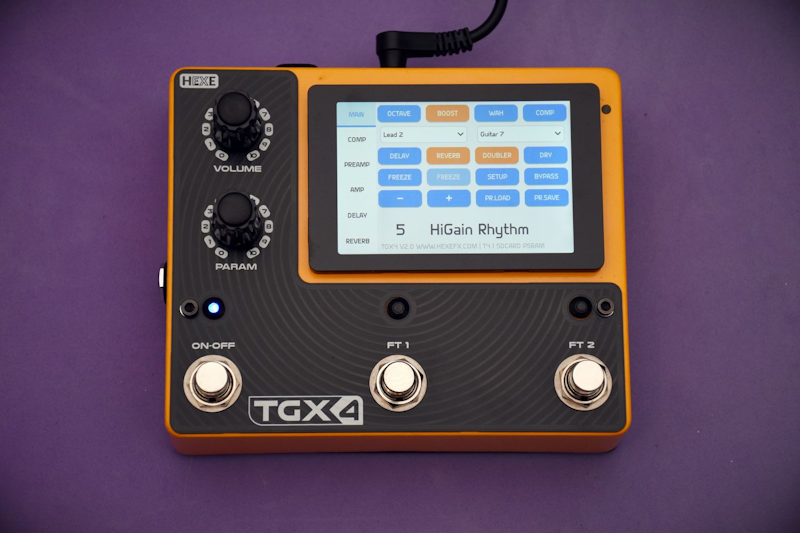
The project consists of both software and hardware. The software is designed to be compatible with a range of Teensy-based platforms beyond the dedicated TGX4 hardware, including a simple Teensy 4.0 with the Audio Adaptor board installed. The project’s hardware design encapsulates a high-quality audio DSP designed specifically for use with guitar and bass instruments in a pedal-form device. Combined, they feature eight amplifier models, ten cabinet impulse responses for sound reproduction, a stereo enhancer for double track emulation, a compressor, wah, noise gate, three-band EQ with high-pass filter, three types of reverb, and more. Assignable expression pedal input, three assignable potentiometers, and a 3.5″ touch screen provide the interface to all of this. An SD card allows storage of 128 presets, and MIDI control, including via web page, enables interaction with other devices.

More information on the software development can be found on the PJRC Forum
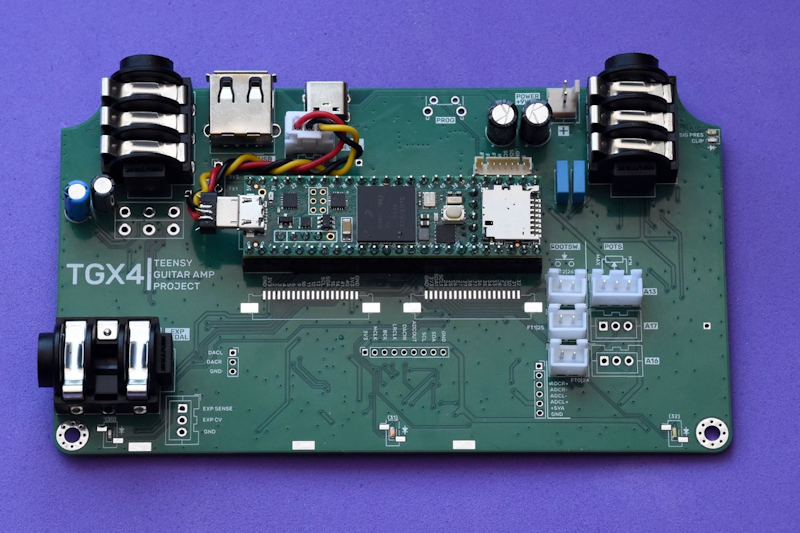
Firmware, hardware, and many more details can be found on GitHub, and a demonstration of the pedal’s capabilities can be enjoyed in the video below.

Spooktacular Halloween Show

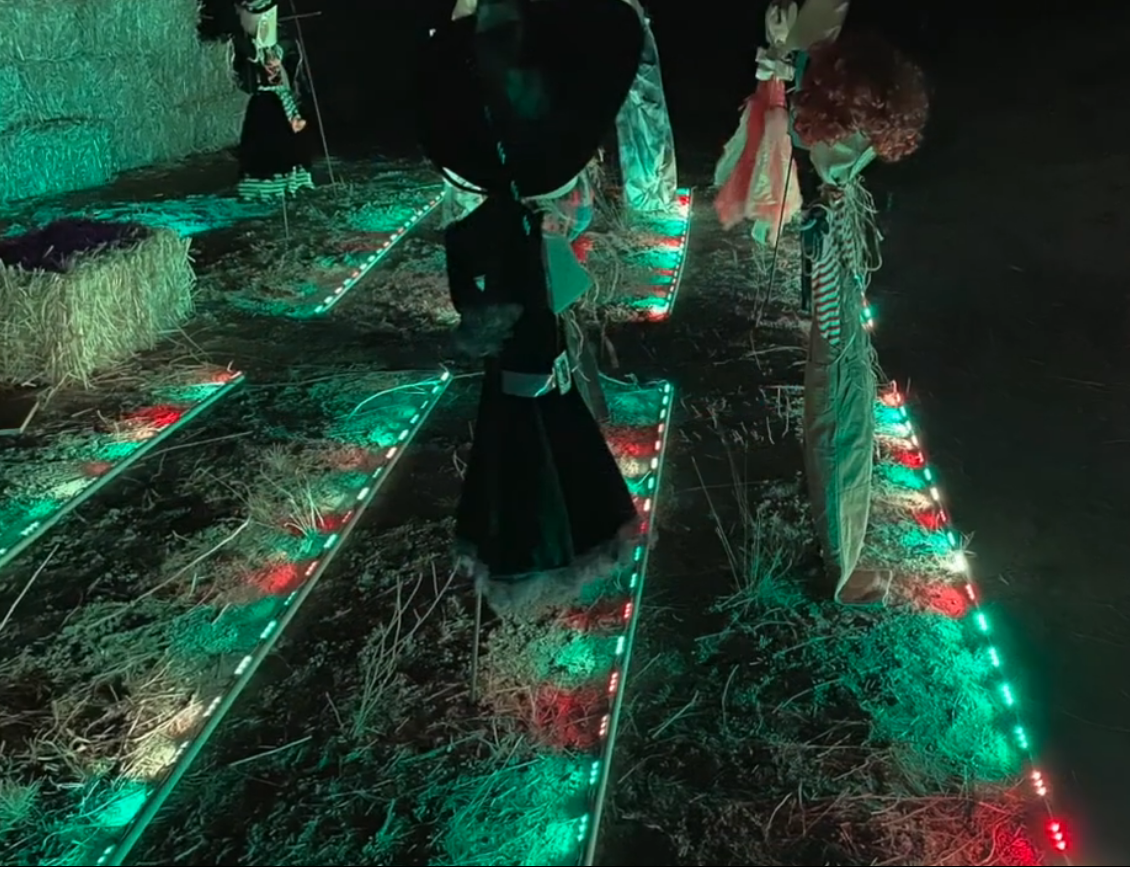
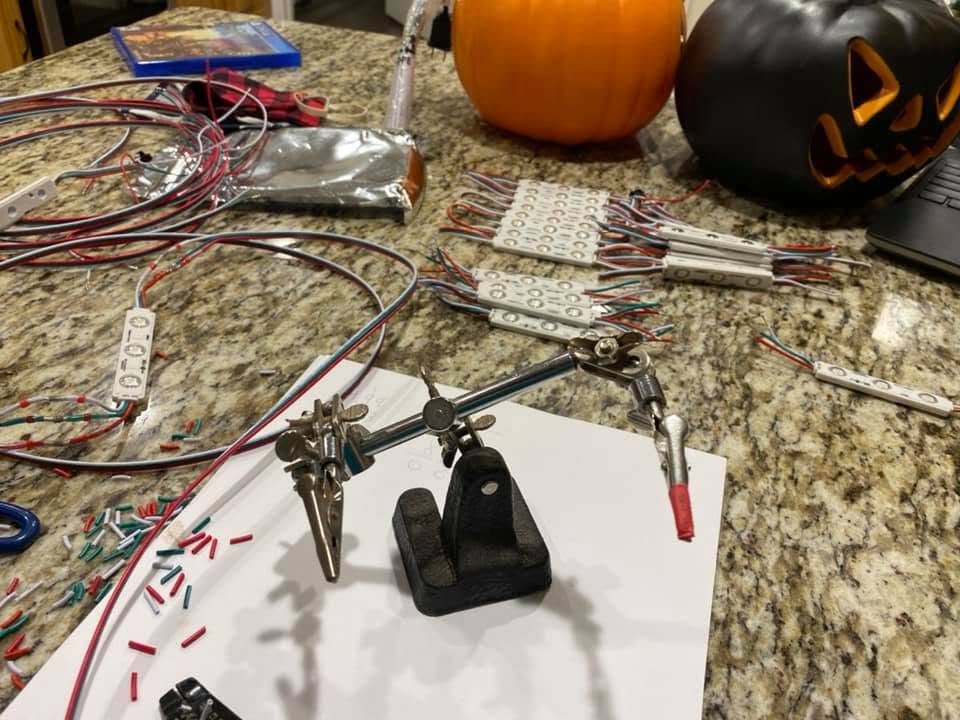
Christopher Rees loves LEDs. So when he got the request to put together a display for the Tremonton City Lions Club Pumpkin Walk, he of course went all-in.

His Teensy 3.2-powered display features 184 RGB 5050 LEDs, three 10-watt RGB floods, three 20-watt RGB floods, and a whole bunch of PVC pipes and custom wiring. A rack-mounted controller manages the system using xLights.

The show is choreographed to a custom mix of Ghosts ‘n’ Stuff by deadmau5, as can be heard in the video below!

PDP-11/70 Emulator

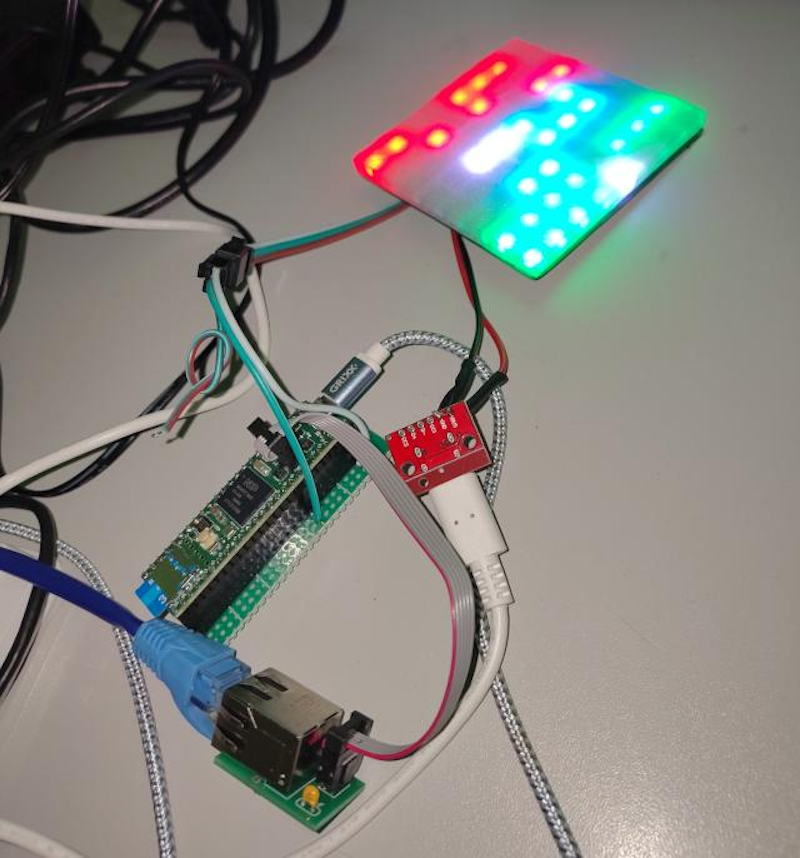
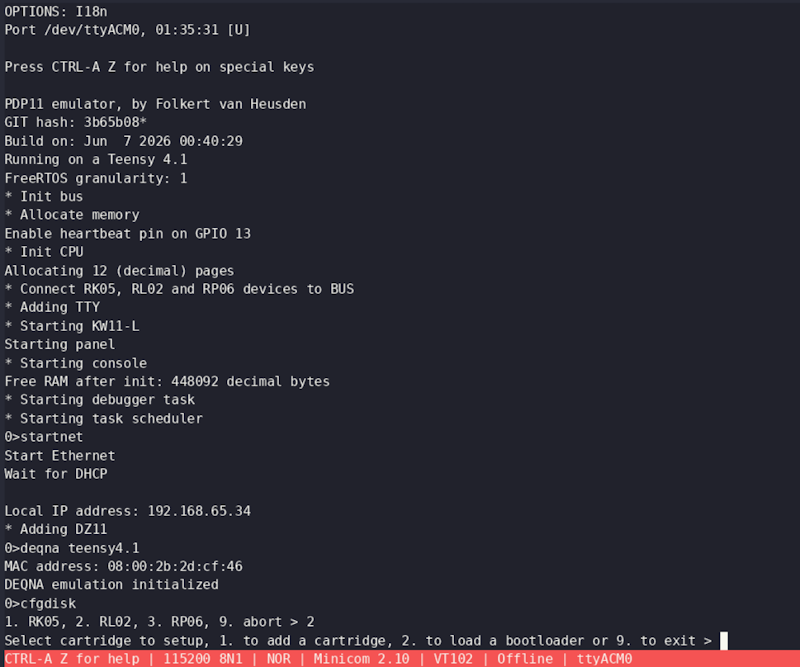
Folkert van Heusden has added Teensy 4.1 support to a microcontroller-focused PDP11/70 emulator.

The system is capable of running UNIX 5 with disk, tape, and serial support, plus 4MB of RAM, an MMU (memory management unit) and high-performance 16-bit 11/70 CPU. It takes around a minute to boot, though can create snapshots for resumption of previous sessions. Teensy 4.1 Ethernet is supported, and a simulated front panel provides plenty of lovely (and functional!) blinkenlights.

More information can be found on the project’s web page, and the source is on GitHub. You can also reach an instance of the software via telnet on pdp.komputilo.nl (username: guest), and via HTTP at http://pdp.komputilo.nl:8080/

DIY Minimoog Synth

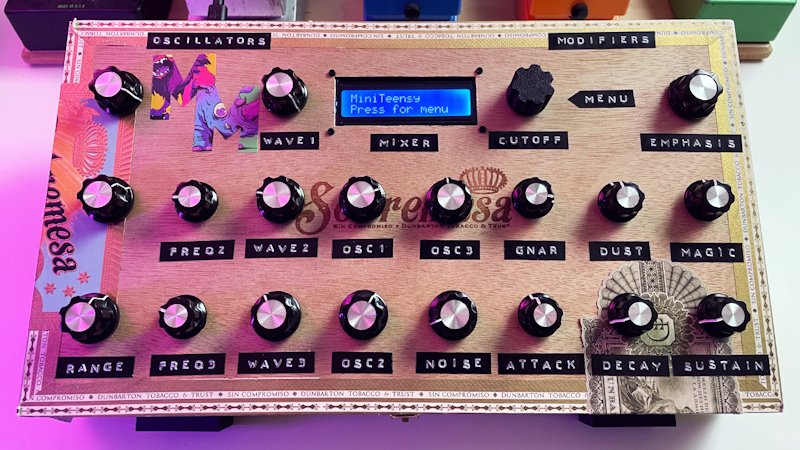
Nick Culbertson is back, with an attempt at recreating the “world’s most iconic” analogue synth using a Teensy 4.1.

If you haven’t guessed yet, we’re talking about the Bob Moog’s 1970 Minimoog Model D — the “world’s first” portable synthesizer, which could be played easily and instantly with no complex patches to deal with. You may recall Nick, aka Mob Pixel on YouTube, from the Teensy 4.0-powered “world’s smallest MIDI controller,”

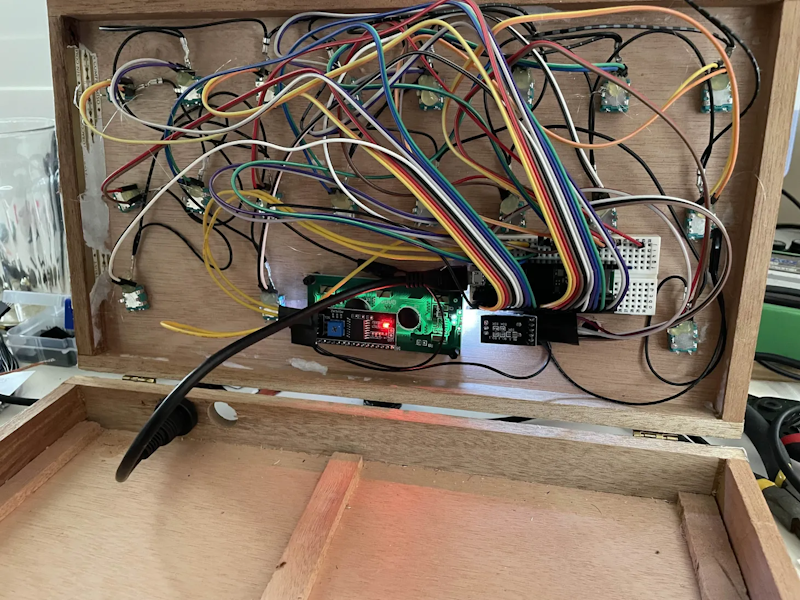
In his video, Nick walks through the fundamental concepts of subtractive synthesis, highlighting oscillators, filters, envelopes, and more, and how they relate to his Teensy implementation of the original Minimoog. The resulting instrument is a six-voice polyphonic synth with three oscillators per voice and six waveforms per oscillator, a 24dB Moog-style ladder filter with ADSR envelopes, and independent LFO with pitch/filter/amp targets, and power, MIDI data and audio all flowing over Teensy USB. Twenty rotary encoders and a 16×2 LCD provide hands-on control.

Code, bill of materials, pinouts and more can be found in the project’s GitHub repo, and a detailed walk-through can be enjoyed in the video below.
Unconventional 3D-Printed Keyboard

Ben Gruver’s lalboard is inspired by one of the most unconventional commercial keyboards of all time: the magnetic/optical two-piece DataHand.

We’ve seen a number of interesting and unique Teensy-based keyboards over the years, such as one that only has two keys, or one that uses individual floppy disks to input each letter. The lalboard is among the more unique keyboards that we’ve seen.

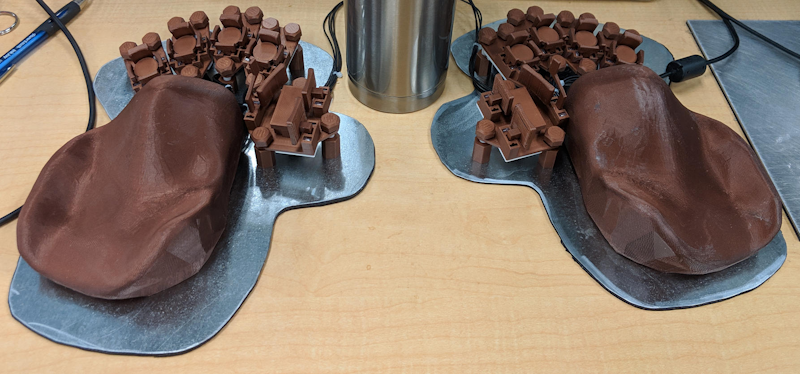
A long-time user of the original DataHand, Ben sought to create an affordable replacement in response to the rising cost of second-hand units. While the layout, functionality, and use of magnets for key return force and optointerrupters to sense position are all directly inspired by the DataHand, the primary goal of the project was to ensure that it could be reproduced using a standard FFF 3d printer. The project improves on the adjustability of the original, with each key cluster gaining six degrees of freedom. The handrests were moulded using plasticine clay, and then scanned using photogrammetry software. Each half of the keyboard uses its own Teensy 2.0 running a modified version of Ben’s original teensyhand firmware, and connected via I2C so that only one USB connection is required for the attached PC. Find the BOM, instructions, and more on the project’s GitHub repo.

Directional Gyro

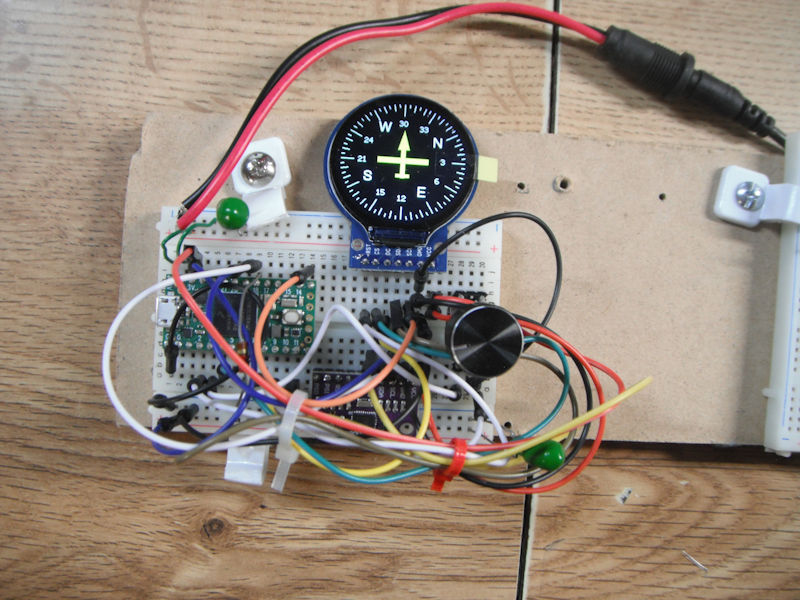
ElectronDon66 has created a Teensy 4.0-based Directional Gyro heading display using a Ceva BNO085 9-DOF Orientation IMU Fusion System-in-Package (SiP) rather than a magnetometer.

The BNO085 is an interesting package, which combines a triaxial accelerometer, a triaxial gyroscope, a magnetometer and an Arm M0 running Ceva’s advanced MotionEngine sensor fusion software. This enables the chip to provide precise, real-time 3d orientation, heading, calibrated acceleration and angular velocity, and more, without requiring the user to dive into complex sensor fusion algorithms themselves.

The gyro features a 1.28″ round TFT LCD modeled after an aircraft heading indicator, and 200Hz update rate. Because it doesn’t use a magnetometer, it is immune to magnetic disturbances, which can be caused by nearby ferrous materials or electric motors. The device must be calibrated to north using a magnetic compass. Source code, BoM, and wiring details can be found in the project’s GitHub repo, and a demo can be enjoyed in the video below.
Rubik’s Cube Solving Robot

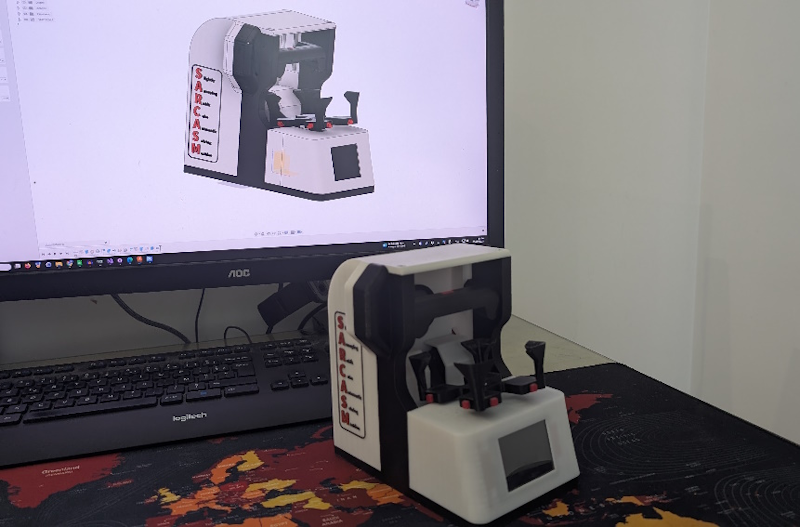
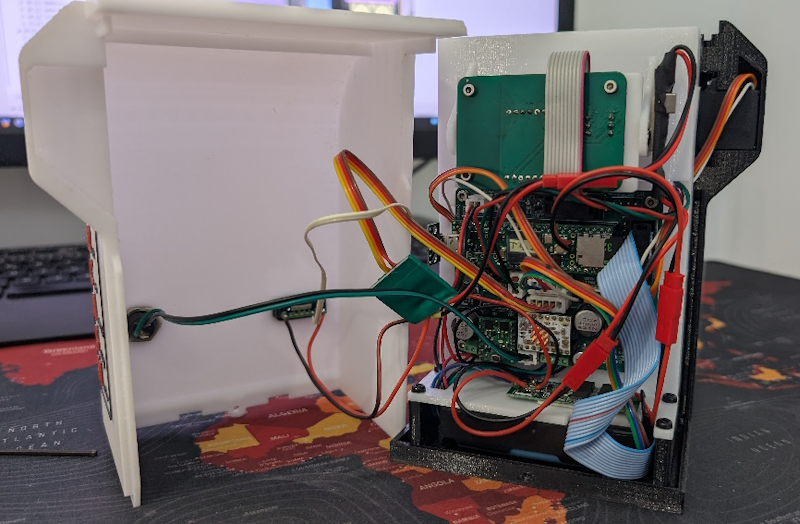
vindar has created S.A.R.C.A.S.M: a Slightly Annoying Rubik’s Cube Automatic Solving Robot! This self-contained Teensy 4.1-powered machine is compatible with any standard Rubik’s Cube and requires no external computation to solve cubes.

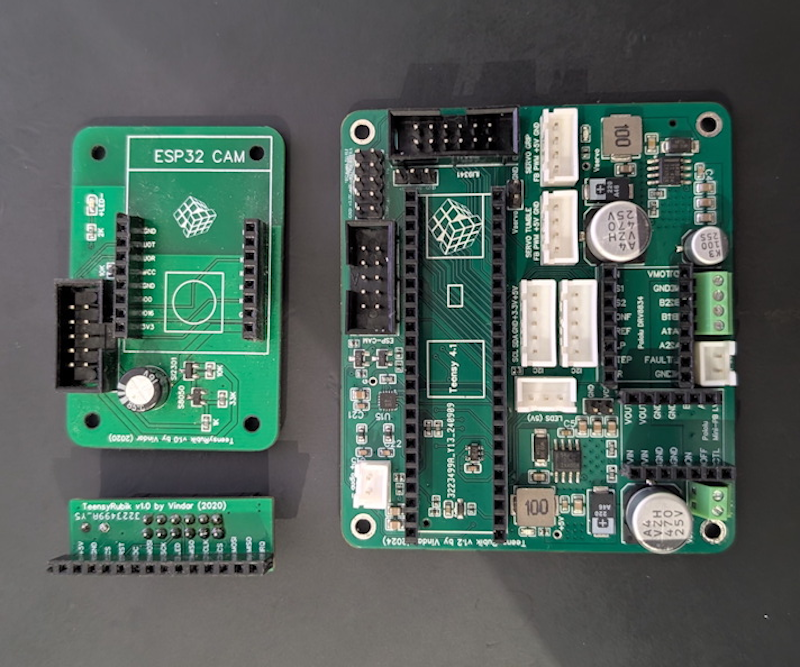
Designed as an over-the-top desk toy, S.A.R.C.A.S.M. is charged and programmed via USB-C. vindar’s Teensy port of Kociemba’s algorithm computes the solution after the board decodes the JPEG received from the ESP32-CAM.

vindar frequently uses Teensy for his projects, but says that for once, using a Teensy 4.1 does not feel like overkill. The Teensy not only runs the Kociemba algorithm to solve the cube, it’s driving the display, running real time audio, driving 2 servos and 1 stepper motor, driving RGBW LEDs,and delivering real-time 2D/3D graphics.

The large codebase for this project uses many different libraries to bring together many functions such graphics, audio, lighting, image capture moves computation, and motor control and movement to create a slightly annoying, but remarkably charming robot that excels at solving any standard Rubic’s Cube. The real-time feedback paired with the over 900 dialogs and 100 songs make SARCASM feel alive.

A custom PCB and 3d-printed enclosure hold it all together. Code and schematics are available on GitHub, and you can see it in action in the video below!