Self-Balancing Mecanum Bike

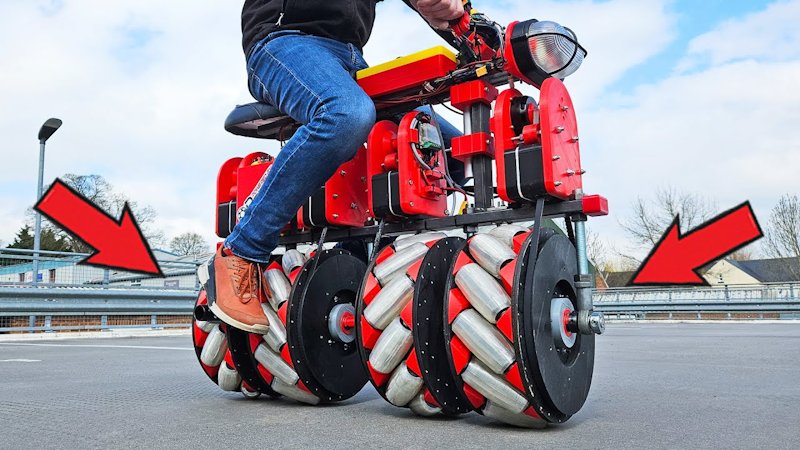
YouTuber James Bruton has created a “screw bike” in the vein of screw-drive tanks, with the additional feat of making it self-balancing. Building upon an earlier front-omni-wheeled bicycle, the latest model can move in any direction, thanks to its four mecanum wheels.

In addition to its steel frame and 3d-printed wheels, the bike features Teensy 4.1 boards to control its ODrive motors via CAN bus. BNO08x IMUs work with the Teensy to help keep things upright. The whole crazy thing can be seen in action below, with source code and CAD files available on GitHub.

Programmable Musical Instrument

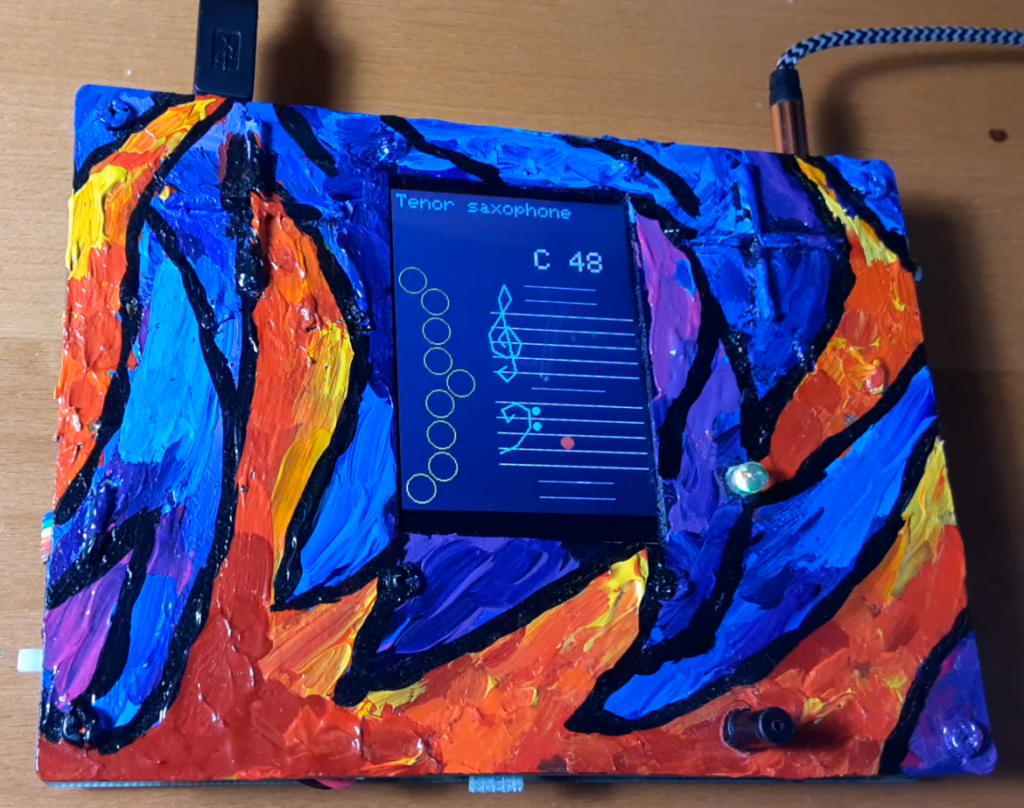
Andy Belov has created a general-purpose programmable musical instrument.

With 18 touch sensors, a touchscreen, MIDI, and Bluetooth, it is intended as a blank canvas (or control surface!) on which to create new musical experiences.

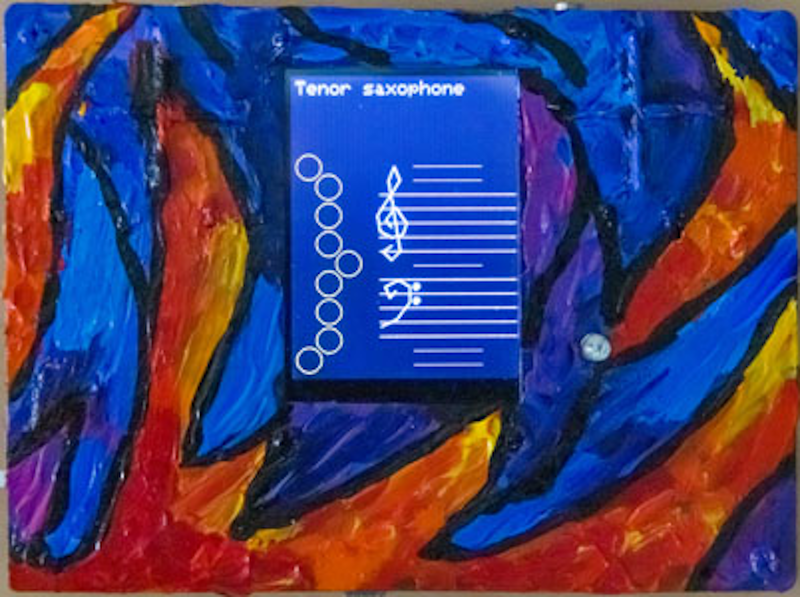
Based around a Teensy 3.6 and Audio Adaptor Board, the device adds two custom PCBs and a fun enclosure to create a music-making device around the size of a handheld game console.

It can currently simulate a saxophone, flute, drums, trumpet, or steel drums. Source code can be found on GitHub, and demonstrations can be seen in the videos below.

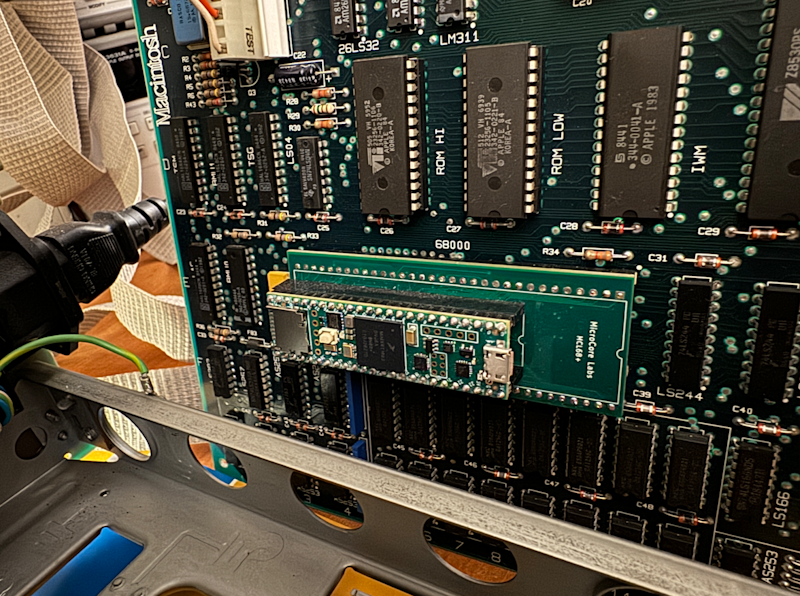
MCL68+ 68000 Emulator

Brace yourselves, because Ted is back with — any guesses? Yep, another drop-in emulator, this time for the 16/32-bit Motorola 68000!

Ted Fried aka MicroCore Labs has been featured a fair number of times on the PJRC blog with his Teensy-based drop-in CPU replacements, including the MCL65-Fast Apple II Accelerator, MCLZ8 Zilog Z80 (RIP!) emulator, and MCL64 Commodore 64 Accelerator.

The MCL68+ emulates both the 68k itself, and the local bus interface (at full speed) thanks to Ted’s prior experience and some new tricks. In the case of the Macintosh 512K, the MCL68+ is able to substitute for the original CPU, while bit-banging the bus at the required 7.8MHz. Byte-wide latches based on 74HCT574 flip-flops are used to power the address and data busses due to the sheer amount of I/O required to emulate the m68k. As always, source code can be found on GitHub, and you can see it in action below.

MiniTouch 2.0

We’re big fans of Emmanuel Presselin’s original Teensy 3.2-based MiniTouch low-cost synth for children’s music workshops, so we were keen to find out more details when he mentioned a new Teensy 4.0-based MiniTouch 2nd Edition!

The MiniTouch 2.0 features a larger 18-note capacitive touch keyboard, two oscillators (up from one), 8-voice polyphony (from 4), FM and AM “ring” modulation, a noise generator with ladder filter, high- and bandpass filters in addition to the existing low-pass, per-voice filters (with note tracking) vs. a single global filter, and delay and reverb effects. A MIDI interface, EEPROM-backed presets, USB MIDI host, and a new PAM8406 class-D amplifier and larger speaker all bring quality-of-live improvements, while still remaining accessible for workshop participants with around a $35 BOM cost. See it in action below!

Racing Rig Dashboard

ThirdEarthDesign has shared their first project, a sim rig button box.

Based on the Teensy 4.1, it uses a custom joystick interface via USB HID to extend the functionality of an already-impressive rig.

The “box” features 13 momentary buttons, three toggle switches, two eight-way rotary switches (effectively 16 more inputs), X and Y axis inputs via two further rotary encoders, and Z axis via analog Hall effect sensor.

WS2812 RGB LEDs provide backlighting, and two PWM fans simulate the feeling of wind! A 3d-printed enclosure, Cricut-created labels, and a custom PCB round out the professional-looking package. More information and pics on the PJRC forums.

XY Midi Foot Controller

PJRC forum member lokki, who you may recall from their unique MIDI Bass Guitar project, is back with another fun musical creation, this time in the form of an infrared foot controller.

Based on the Teensy 4.0, this project uses USB Host to transmit the X-Y position of an object (such as a foot) inside the frame to a connected computer; sort of like a giant Kaoss Pad for your toes! In addition to the IR frame, WS2812 LEDs along the edges help indicate the detected coordinates, and four big buttons allow the user to switch between modes.

More information and source code can be found on the PJRC forums, and a demonstration can be seen in the video below.