Daft Punk Style Helmet

Love Props has made an awesome looking Daft Punk style helmet.
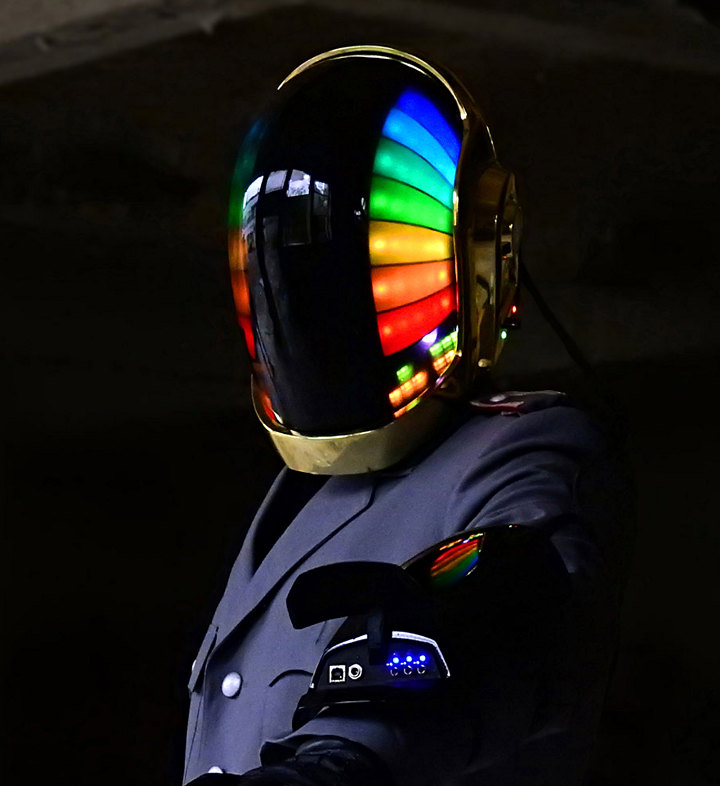
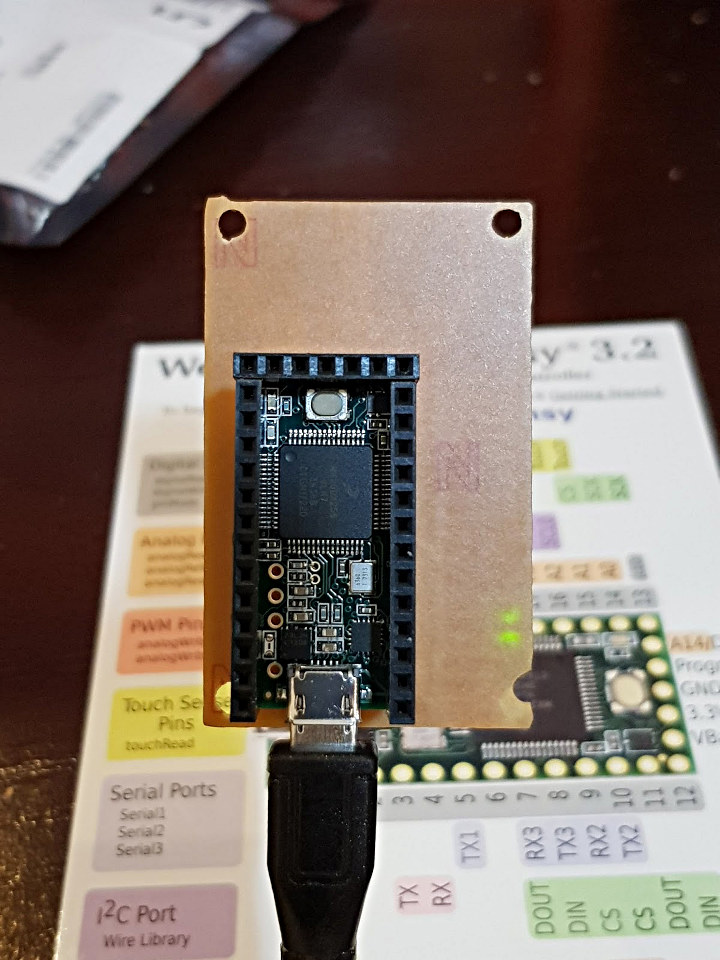
Teensy 32 and TeensyDuino powered light and sound stage prop. It features real time wire/wireless MIDI and microSD file MIDI driven light shows. It also can perform real time audio analysis, beat / tempo detection and real time music driven light effects.
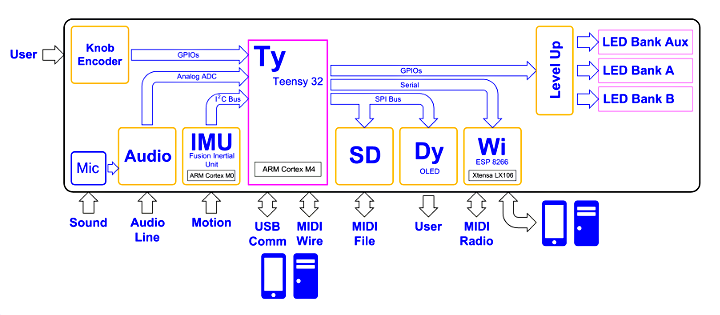
The hardware technical specifications include:

*Complete full RGB lighting. 200 smd RGB
*No cheap wire soldering. Each panel has a custom housing PCB for a safe and durable soldering
*ARM Cortex M4 Teensy processor. Tinny and powerful processor
*Wifi NodeMCU. Allows Wi-fi interaction with the unit
*Accelerometer. Allows motion interaction with the unit
*Internal Microphone and Line input. Allows the unit to interact with music or sound
*USB and SD Card slot. Makes easier to add LED choreographies or update the OS
*MIDI support. Makes easier to add more LED choreographies without programming knowledge via MIDI
*Custom MIDI Library. Plug and play with the common music production softwares
*Custom chromatic library. Absolute control of the colors, saturation, brightness and timing for pure colors
*Internal LCD Screen. A 2 inch screen displays the menu of the OS. Scrollable with the right ear control knob
*Internal Fans. 2 fans placed on the jaw allows a cool breathing of the user
*Long-lasting autonomy. Powered by the 14 Amps LoveProps gauntlet, more than 6 hours of autonomy
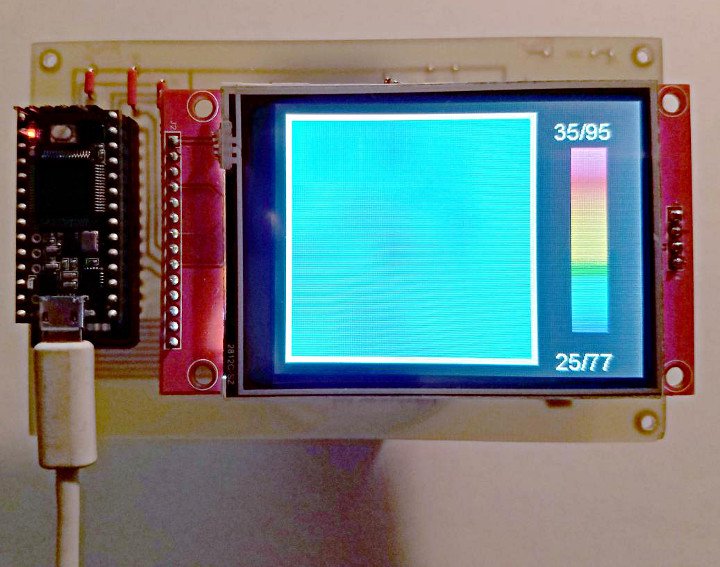
Thermal Imaging Camera

Kris Kasprzak built a Thermal Imaging Camera.

After figuring out that he has a leak in his A/C duct system, Kris built the camera to help isolate the problem.  The camera module he used is based on the AMG8833 sensor.  Using a touch screen display capabilities allows the user to set the to set the min/max temperature.

The code for the project can be found on this Google drive.

Here’s a nice video Kris published this great video of the project.

Spino – Retro Gaming POV LED Display

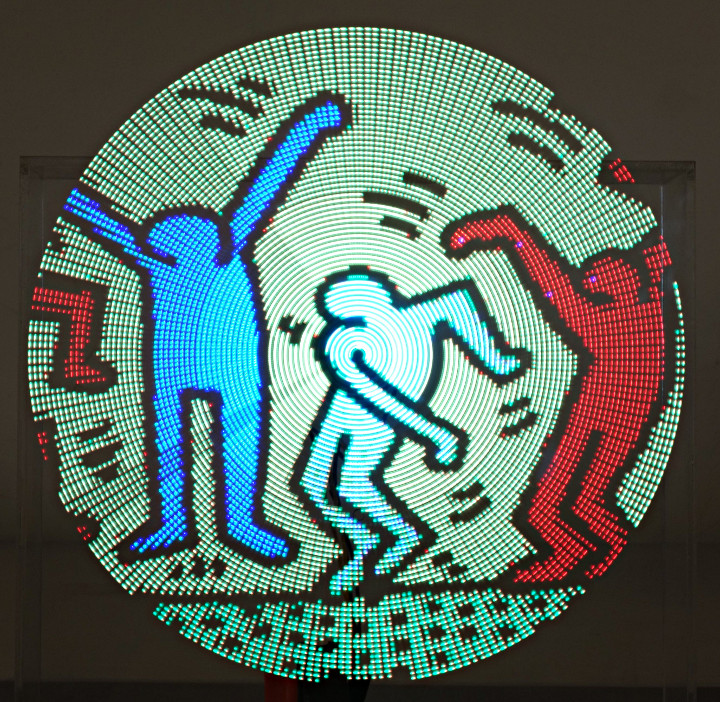
Raphael Seghier, Guilaume Cherau, and team have been building SPINO – a POV display that can connect to your phone through bluetooth and play retro games.

Spino uses either 32 or 64 LEDs for the display.  Data is transferred via Bluetooth and the PCB connects to the power using a wireless charging module.  Retro games such as PacMan and Space Invaders can be played on Spino.  They also hacked the Doom 2 code to play on Spino.

This video shows Doom 2 being played on the POV display.

Minecraft Player Status

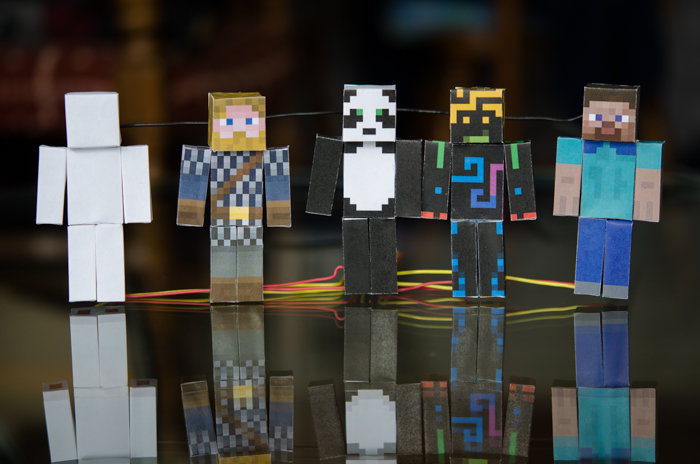
Mark Fickett made some cool light up avatars to indicate when players log on and off of his Minecraft server.

When a player logs into my Minecraft server, the associated folded paper avatar lights up: blue-green as they log in, white while they’re online, red just after they sign off.

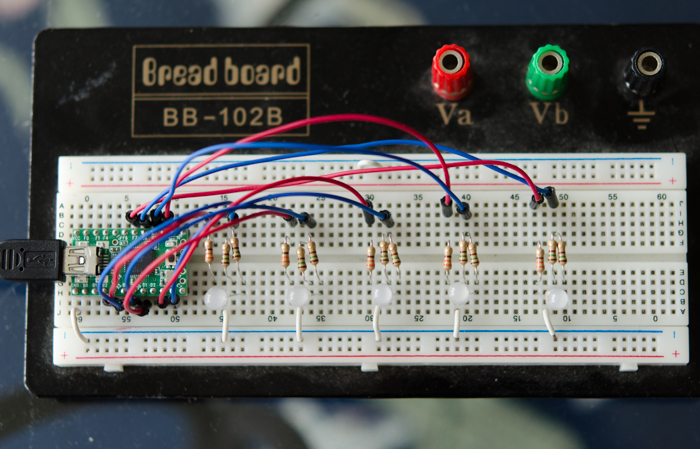
A Python script queries a Minecraft server for player status, then sends a list of online players to the Teensy. The Teensy runs an Arduino sketch that translates the list of names to output pin settings, controlling the LEDs.  You can find the code for the project on Github.


Tesla Coil Winder

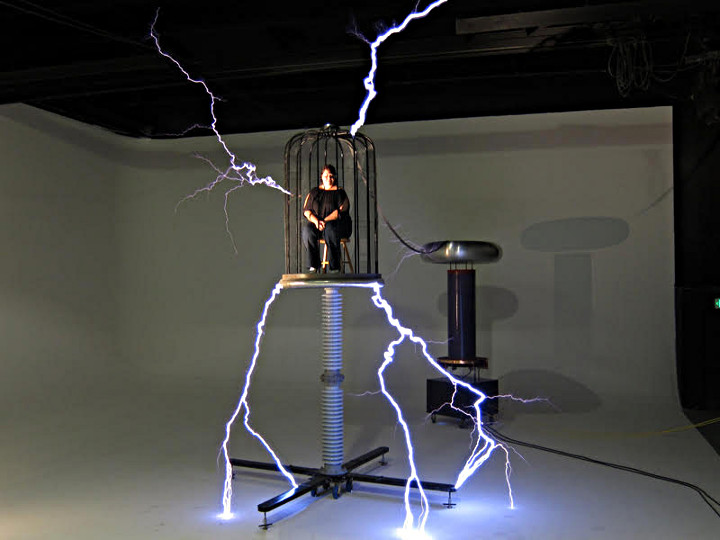
Jeff Parisse made a Tesla coil winder.  Inspired by the winder made by Jeff Rosowski, Jeff Parisse ported the code to run on a Teensy.

This high resolution Tesla coil winder shown here winding 140um wire in a single layer. The code runs on a fast 32bit processor (Teensy 3.2) switching Pololu motor drivers in 16th steps giving 6400 steps per revolution and 800 per mm. Need a robot?

This high resolution Tesla coil winder shown here winding 140um wire in a single layer. The code runs on a fast 32bit processor (Teensy 3.2) switching Pololu motor drivers in 16th steps giving 6400 steps per revolution and 800 per mm. Need a robot?

You kind find the code on this forum post.


Shadow Wall Art Installation

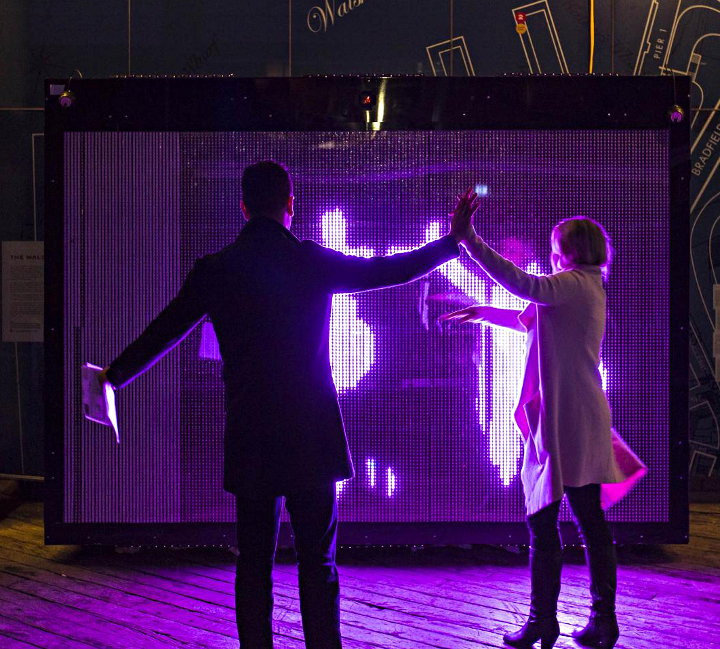
Natalia Galin created an interactive art installation that inverts the usual concept of shadows being cast as black silhouettes during the day and turns them into a blaze of color at night, mirroring the movements of people passing by.

Shadow Wall is a 180 x 120 LED display for Sydney’s Vivid Festival of Light.

Natalia and team ported the code to Python in order to access the full suite of Open CV functionality.  They also sped up the serial data transfer.  Their code can be found on GitHub.


Video of the wall in action

Budget BarBot

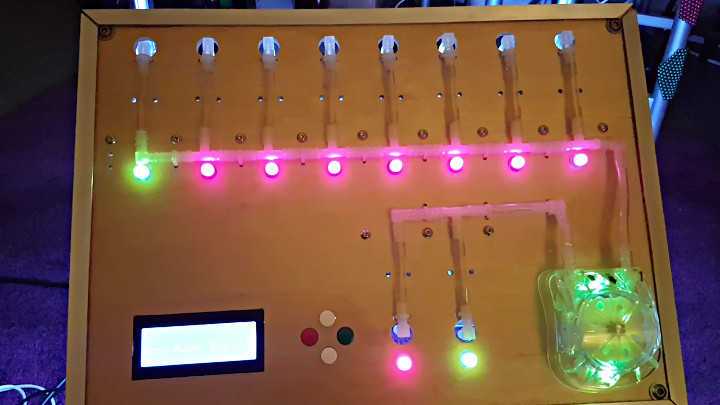
David Hopkins built his own BarBot for dispensing cocktails (on a budget)

With this cool contraption you can pour cocktails with a touch of a button.  It has a single pump with multiple clamped valves that can be configured to pour multiple recipes that are stored on an SD card. It also features a cleaning cycle so that once you are done with serving, you can flush the system leaving it ready for the next use.

This video shows the BarBot in action

Star Catcher – Cooperative Physical VR Game

Adelle Lin and Matt Pinner built Star Catcher, a  cooperative virtual reality game, installed at Play NYC.


Players with nets move around the universe catching falling stars from the glowing ceiling. With each star caught, a new star is added to a constellation in our sky. These luminous Falling Stars have a romantic relationship with us on earth. Catching them has fun, playful, hopeful, and energetic effects.

The stars are suspended from the ceiling from strips of LEDs, each with a traveling light that represents a falling star.  Players hold a net with a location tracker installed that they use to catch the falling stars.  A projector is used to project a galaxy on the wall which is slowly filled with constellations as stars are caught.

Ornament & Crime Synthesizer Module

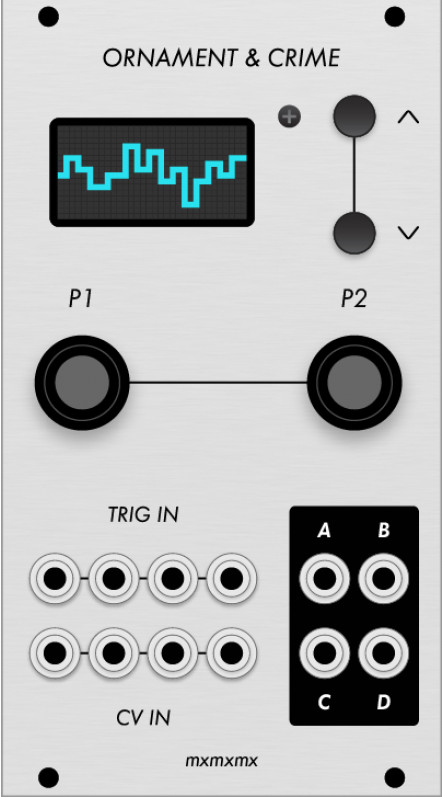
Ornament & Crime (Patrick Dowling (aka pld), Max Stadler (aka mxmxmx) and Tim Churches (aka bennelong.bicyclist)) developed an open-source polymorphic CV generator.

This module is packed with both hardware and software features. The Ornament & Crime web site has great information on how to build your own as well as documentation on the firmware available.  You can find the software and hardware details on GitHub.

While you can’t buy a completed module, you can get a kit from SynthCube.

This video, published by Synth DIY Guy, gives a great review on building the module himself.

In this video Voltage Control Lab you can see the module in action.