Forum user Austin519 made a stylish, sound reactive LED light up coat.
The coat features 673 WS2812 LEDs driven by a Teensy 3.2, Prop Shield, and an ADMP401 MEMS microphone. It’s powered bu 2 5200mAh lipo batteries. It includes some user controls to change the pattern, sound reactivity, and overall brightness.
Tomash Ghzegovsky made a very cool DIY drum machine for the 2017 Fasma Festival
The goal of the project was to come up with something small, affordable, and buildable in just a few hours. The result was this portable, battery-powered drum machine.
While this drum machine may be small in size, it’s not small on features. It has 4 voices (kick, tom, snare, and hat) and 4 parameter controls per voice – pitch, decay pitch modulation, and distortion. A 9V battery will power this little guy for up to 7.5 hours. More information on the features can be found on this GHZ LABS page.
Tomash put some great documentation together so that you can build your own. A manual, schematics, bill of materials, gerber files, and firmware are all available on this GitHub page.
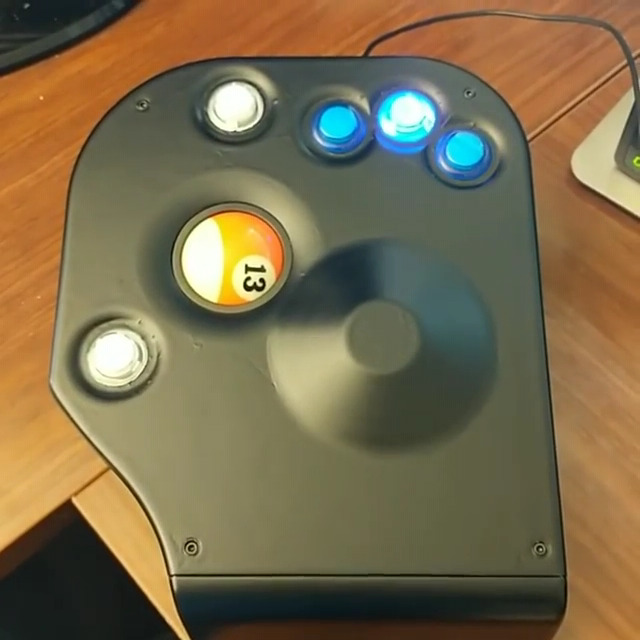
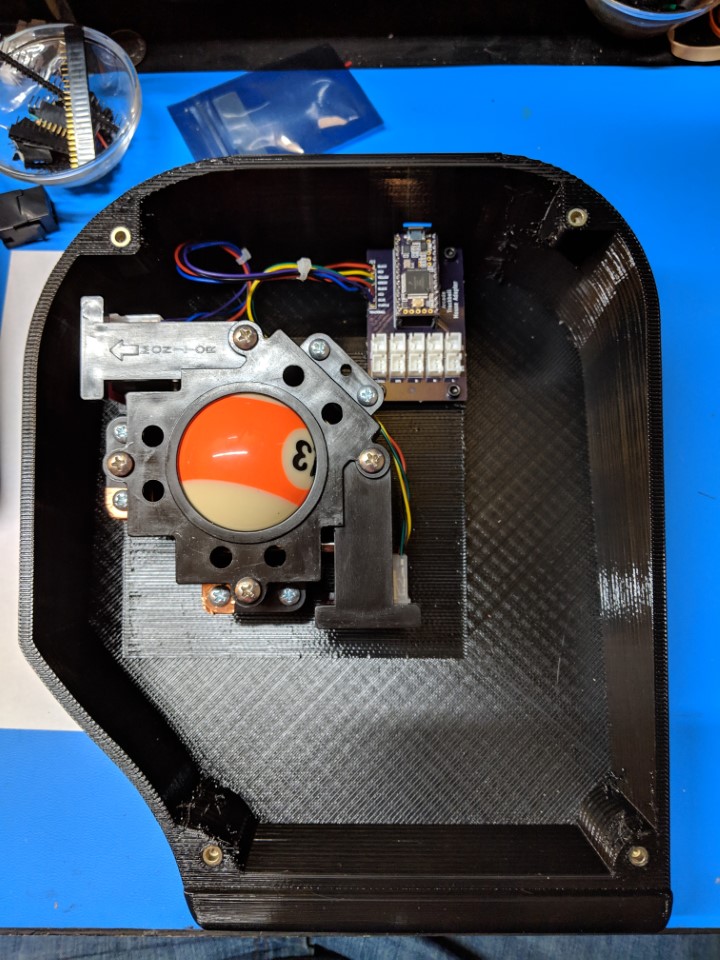
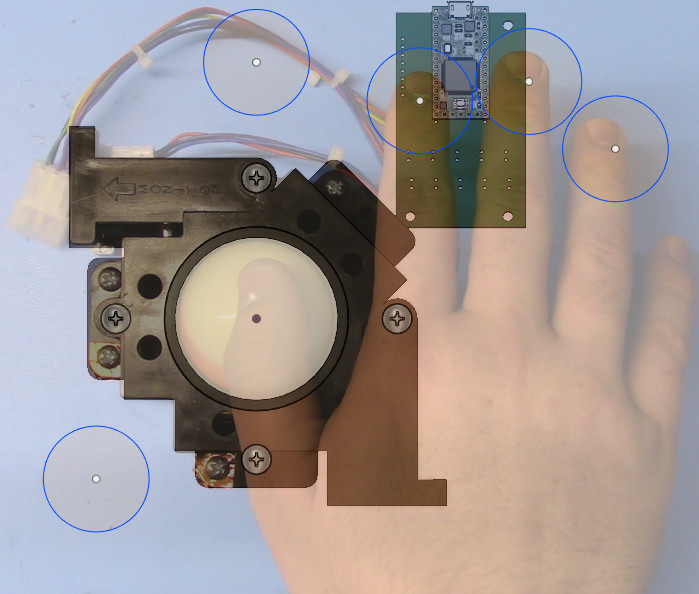
The “feels like Minority Report” touch/pen interface was less than ideal for KiCAD, so he build this one-handed keyboard macro pad.
Watching people use the Surface studio has been interesting. It seems to have some great potential, but functionality with most software programs is lacking and seems to make the Surface awkward to use.
This project is a great example of using Teensy and some DIY ingenuity to improve usability.
Designing a PCB from the comfort of your couch seems pretty enticing. Maybe DIY projects like this one can make this a reality.
Robin Baumgarten created the Quantum Garden, a beautiful interactive art installation that visualizes the STIRAP (stimulated Raman adiabatic passage) quantum process.
The piece uses 228 neopixel rings with 16 LEDs each. Inside each ring is a springy door stopper that when touched generate fractal-like effects. It uses 3 Teensy 3.2 boards and a PC running a Python script to simulate the quantum problem.
The Quantum Garden is connected to the Quantum Black Box, a sophisticated software device developed by quantum physicists. When people touch the springs they aren’t just making pretty light patterns happen, they are generating inputs that will be processed by the Quantum Black Box and used to help solve an important scientific research problem.
The project is a collaboration between the University of Turku Schools of Science and the School of Arts, Design and Architecture at Aalto University, and sponsored by the Centre for Quantum Engineering.
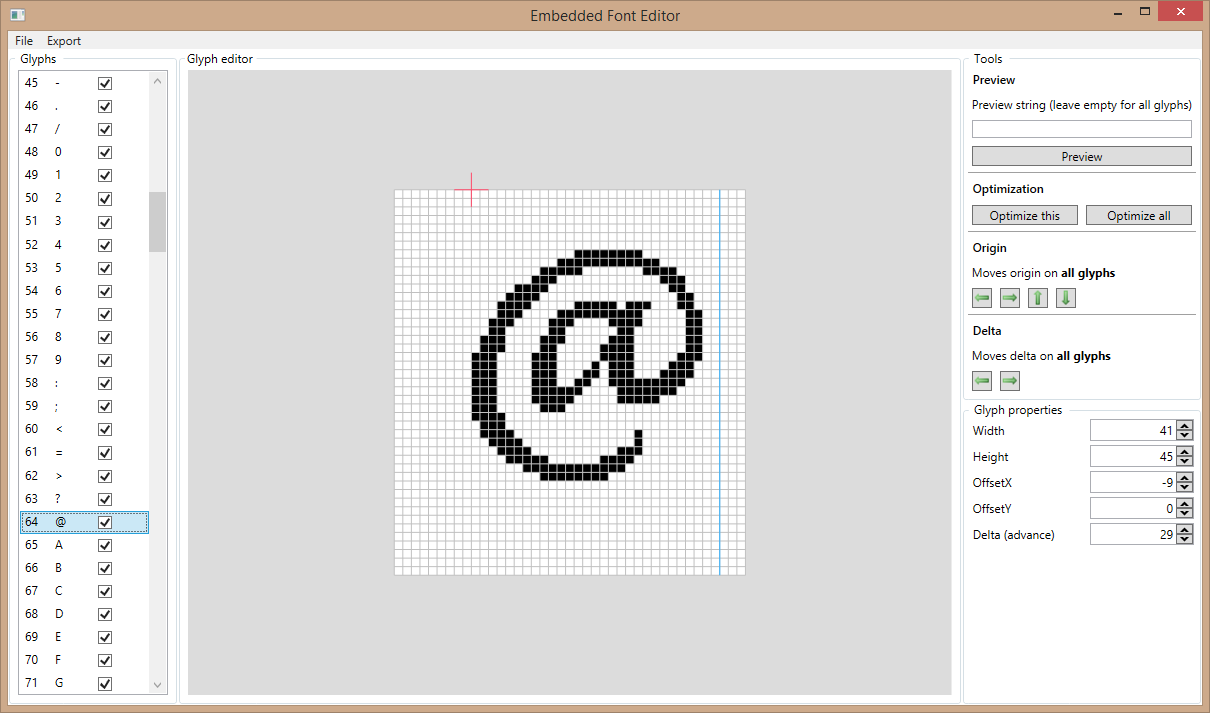
Frank saw a lot of forum posts from people asking how to revive a keyboard from an old, broken laptop. Many of the answers were to the tune of “it can’t be done” or “it’s too hard”, so he set out to come up with a solution. The final result is clever controller board that works with almost all keyboards. One side of the board uses a Teensy-LC for FPC cables with up to 26 pins. The other side uses a Teensy-32 for FPC cables with up to 34 pins.
Check out this Instructibles page for detailed information on how to build this yourself.
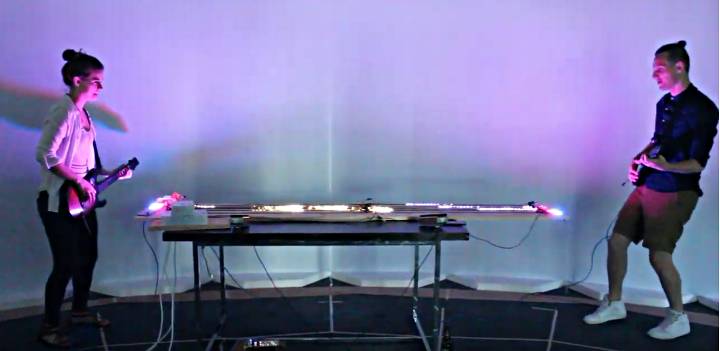
Adam Haile and Dan Ternes of Maniacal labs created Bixel, an incredible interactive LED panel.
This incredible 16×16 display features SK9822 LEDs, each with a pushbutton, and 595 shift registers soldered to a massive 500x500mm PCB. A Teensy 3.6 scans the buttons and sends the data to a Raspberry Pi 3 that drives the LEDs over a USB serial connection.
Matt Bradshaw designed and built PolyMod, a very cool, open source, polyphonic, modular digital synthesizer.
The PolyMod can operate in polyphonic (poly) mode making each module able to play multiple sounds, generating chords and harmonies.
This synth is entirely digital using a Teensy 3.6 with a Teensy Audio Shield to replicate traditional analog functions in software. This approach allows users to easily create polyphonic patches, something that can be more challenging in analog systems. This project also has the advantage of being a fairly low cost way to get into modular synthesis.
When the synth is powered up, the Teensy scans each of the module sockets and for each one detected, creates a virtual equivalent in software. When a key on the keyboard is pressed, the Teensy coverts the data to a control voltage (CV) signal, which can be connected to any of the modules to generate sound.
Current modules include an oscillator, filter, envelope, low frequency oscillator (LFO), amplifier, and noise generator.
Chris Miller made the Teensy Beats Shield, an open source, hand held, highly portable, step sequencer.
The inspiration for the project came from Chris’s desire to fill a void in open source handheld musical instruments after finding that most portable audio sequencers are expensive and completely closed sourced. Someone recommended using Teensy with its digital signal processing (DSP) capabilities – and the Teensy Beats Shield was born.This handheld synth uses a Teensy 3.6 and the SGTL5000 audio codec chip and features a 2.4″ TFT display. It
Detailed information on the project including information on how to build your own can be found on this HackaDay project page.
Code for the project is available in the teensy-beats GitHub respository.