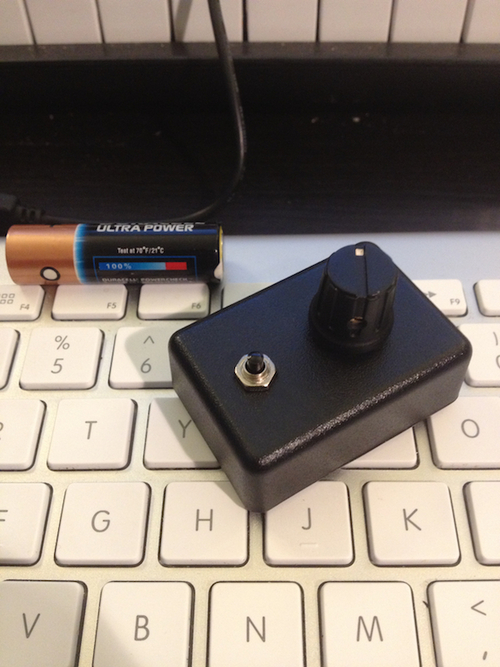
Brendan Ratliff created The Knobber, a tiny MIDI controller with precisely one knob and one button. This compact design is pretty handy when you have limited space and you don’t need the many knobs your favorite controller offers.
Brendan’s website has a good write of the project and also offers the code he wrote.
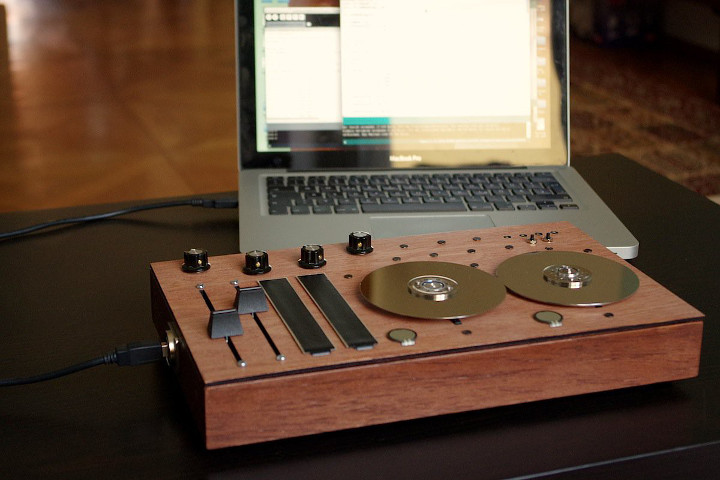
For the disks Jan hacked a couple of old hard drives for the motors and platters. The disk movement is sensed by IR LEDs and phototransistors and using quadrature encoding.
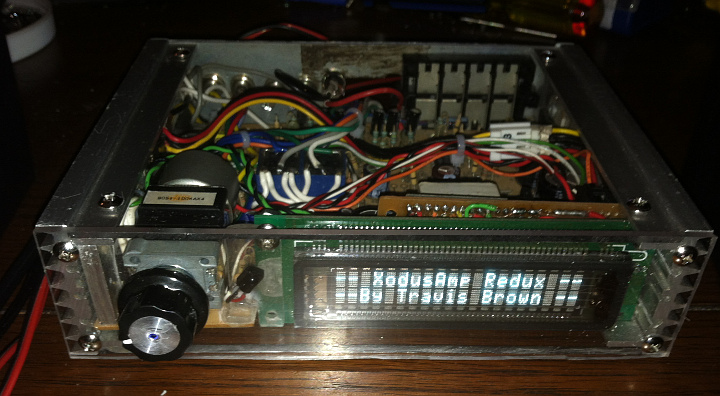
Years ago Travis got his hands on an old Ford Probe Audio Amp. He got it working and improved the housing for it. Years later he re-visited the amp and did a few upgrades on it, including a motorized potentiometer for volume control, a new housing, and a new display screen. His website has a great write up on the project.
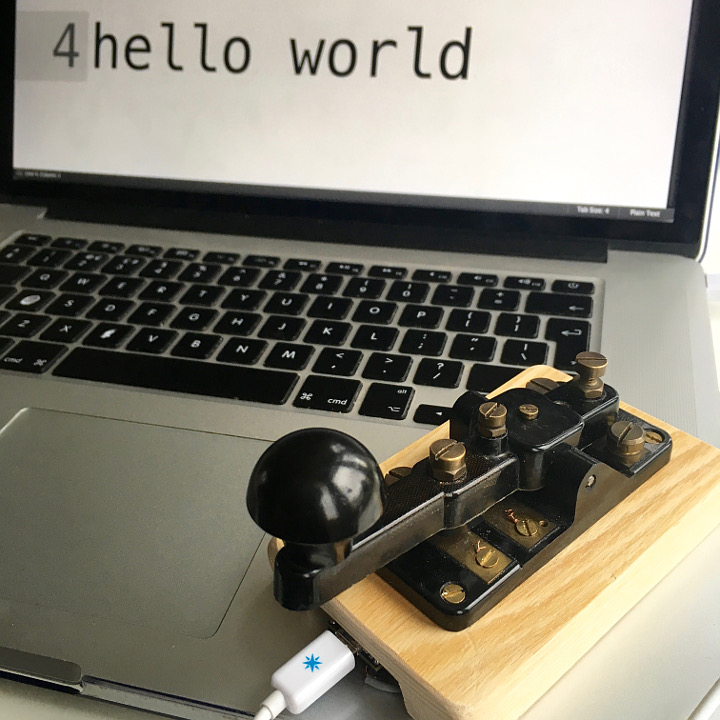
Nomblr turned her dad’s Morse key from the 1950s into a USB keyboard. This is a pretty impressive modernization of an old-time device. It’s even more impressive that this was her first foray into working with electronics.
There is a bit of a write up on the project over on Hackaday.
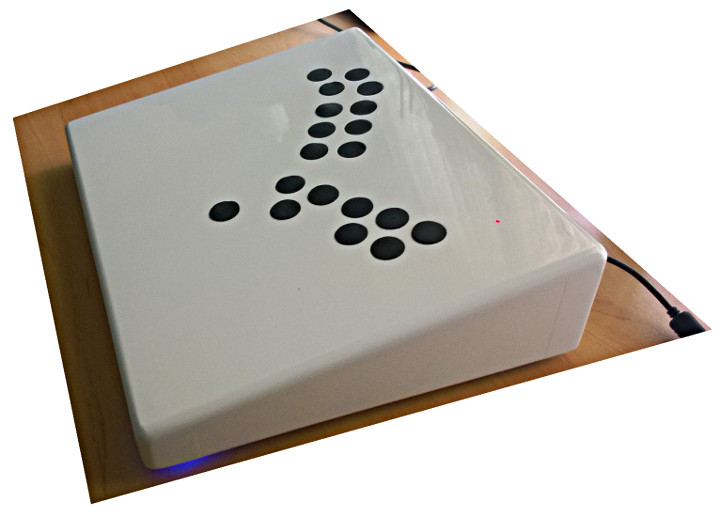
Djordje Milicevic built a beautiful finger drum machine (MIDI to a PC doing the drum sound synth). The pads are velocity sensitive for different sound depending on how hard they’re played.
This video shows a great demo of this elegant machine in action
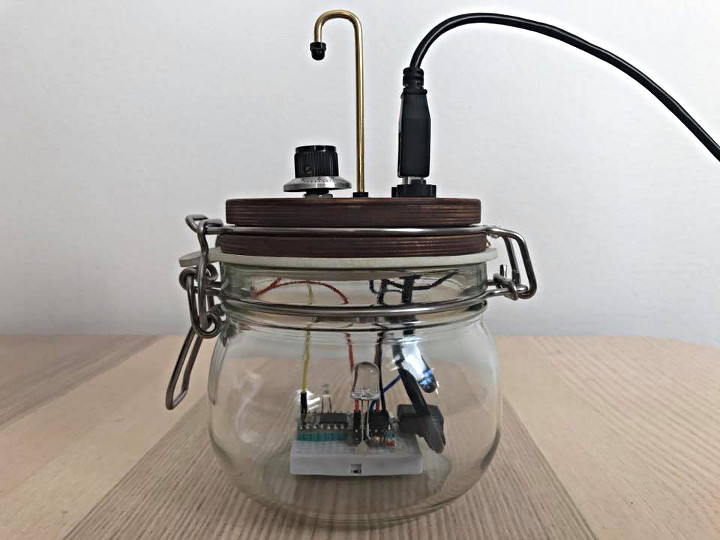
Koka Nikoladze came up with a creative solution to house his fragile prototype – electronics in a jar (not to be confused with Whiskey in a Jar)
The project sends a midiNote 127 with the velocity 127 when you touch the metal pin by sensing capacitive touch. When the prototype was done on a solderless breadboard it was a bit fragile. Koka didn’t want to wait for a PCB to be made, so he spent $1.40 at IKEA on a jar. He drilled a few holes in the top and made a secure enclosure for his project.
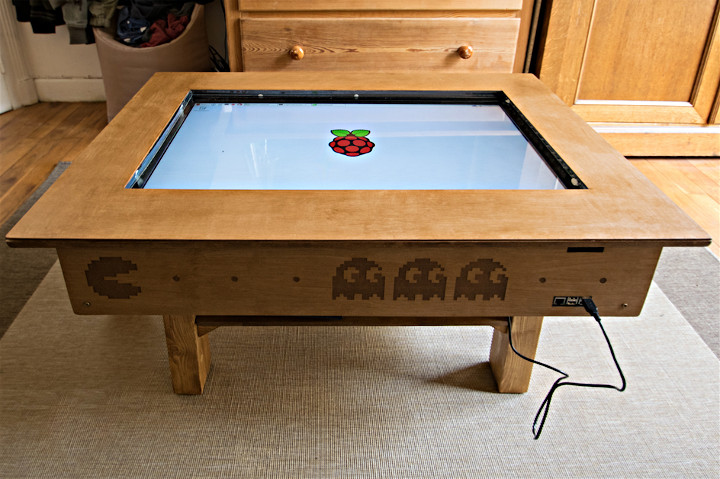
Jean Peradel created his own touch screen coffee table using a flat screen TV, a CCD sensor from an old scanner, and IR LEDs. We love a good DIY project, and this one fits the bill.
The Hackaday.io project page for this is excellent. There is a good write up of how the project was developed and instructions on how to do it yourself, including the code that was used.
Here’s a nifty test video by forum user Potatotron
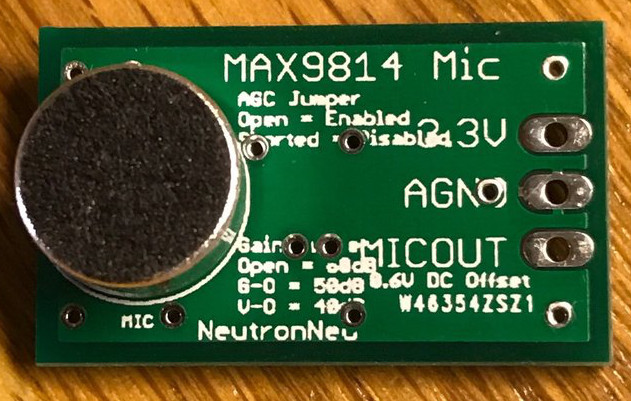
This module is designed for Teensy boards and has the proper signal voltages for use with the audio library. It uses the MAX9814 – a high quality, now noise, pre-amp chip. This module is designed to work directly with the Teensy analog inputs – you don’t need the audio shield to use this module.
If you are doing any project that requires a microphone and a Teensy, go buy this now.
Ranjit Bhatnagar created a stone sound sculpture that responds to the settling of its stones and the weather by playing sounds. This beautiful sculpture uses sensors for pressure, humidity, temperature, and barometric pressure to collect data and send it to a drone synthesizer, making the sculpture feel alive with sound.
Ranjit posted a bit of technical information on the project over on the forum.
This video is a walkthrough of the sculpture. You can hear the change in sounds the sculpture is generating while walking around it.